Descripción del Producto
Descripción del Producto
Roller Chains – ANSI, BS/DN, Anti-Corrosive and Attachment Types
Roller chains are important components and accessories in the whole conveyor belt system. They are used combined with roller sprockets as drive system to ensure the stable and smooth conveying and transmitting. We can supply all kinds of roller chains for you. Just refer to the following introduction, and decide which 1 is suitable for you. As for the detailed specifications, you can get them in 3 ways:
ANSI standard roller chains are the most widely used power transmission chains in the USA. A true powerhouse in precision & quality, the Nitro ANSI chains are built to handle a broad range of applications across many industries. Rigorous quality standards ensures every chain consistently adheres to our requirements for strength and dependability. ANSI chains come in a several options including multiple strands for applications with higher horsepower requirements.
| Chain Number | Paso | Inner Width | Roller Diameter | Overall Width | Pin Diameter | Plate Height | Plate Thickness |
| # | PAG | b1 | d1 | L | d2 | h2 | T |
| 25-1* | 1/4 | 1/8 | 0.130 | 0.311 | 0.091 | 0.228 | 0.030 |
| 35-1* | 3/8 | 3/16 | 0.200 | 0.488 | 0.141 | 0.346 | 0.050 |
| 40-1 | 1/2 | 5/16 | 0.312 | 0.653 | 0.156 | 0.469 | 0.060 |
| 41-1 | 1/2 | 1/4 | 0.306 | 0.541 | 0.141 | 0.390 | 0.050 |
| 50-1 | 5/8 | 3/8 | 0.400 | 0.815 | 0.200 | 0.585 | 0.080 |
| 60-1 | 3/4 | 1/2 | 0.469 | 1.571 | 0.234 | 0.709 | 0.094 |
| 80-1 | 1 | 5/8 | 0.625 | 1.287 | 0.312 | 0.949 | 0.125 |
| 100-1 | 1-1/4 | 3/4 | 0.750 | 1.590 | 0.375 | 1.188 | 0.156 |
| 120-1 | 1-1/2 | 1 | 0.875 | 1.980 | 0.437 | 1.425 | 0.187 |
| 140-1 | 1-3/4 | 1 | 1.000 | 2.141 | 0.500 | 1.663 | 0.219 |
| 160-1 | 2 | 1-1/4 | 1.125 | 2.551 | 0.562 | 1.889 | 0.250 |
| 180-1 | 2-1/4 | 1-13/32 | 1.406 | 2.866 | 0.687 | 2.047 | 0.281 |
| 200-1 | 2-1/2 | 1-1/2 | 1.562 | 3.161 | 0.781 | 2.375 | 0.312 |
| 240-1 | 3 | 1-7/8 | 1.875 | 3.760 | 0.937 | 2.791 | 0.375 |
Incorporating links that are twice as long as standard roller chains, the roller chain is intended for long drives, low-to-moderate-speed applications, and uses sprockets with at least 24 teeth. They have been produced with thicker sides plates in order to handle higher working loads than standard chains. With a more robust side plate, heavy roller chains maintain their strength and stability over longer periods of time.
Hollow pin roller chain is essentially the same thing as a standard roller chain just with “hollow-pins”. This not only decreases the chain weight, but it also gives you the ability to place extended pins through the chain for conveying product. Many applications include; bakeries, overhead conveyors, elevators, poultry, agricultural, and a wide range of other applications.
| Size | Pitch (P) | (W) | (R) | (D) | (d) | Hollow Pin Length | (F) | (H) | (T) | Weight |
| 40HP | 0.500″ | 0.313″ | 0.312″ | 0.221″ | 0.157″ | 0.689″ | 0.689″ | 0.472″ | 0.059″ | 0.35 LBS/ FT |
| 50HP | 0.625″ | 0.375″ | 0.400″ | 0.283″ | 0.202″ | 0.854″ | 0.854″ | 0.591″ | 0.079″ | 0.58 LBS/ FT |
| 60HP | 0.750″ | 0.500″ | 0.469″ | 0.333″ | 0.236″ | 1.055″ | 1.055″ | 0.713″ | 0.094″ | 0.81 LBS/ FT |
| 80HP | 1.000″ | 0.625″ | 0.625″ | 0.449″ | 0.318″ | 1.276″ | 1.276″ | 0.950″ | 0.125″ | 1.46 LBS/ FT |
|
| Size | Pitch (P) | (K) | (W) | (R) | (D) | (F) | (T1) | (T2) | (H) | Weight (LBS/ FT) | ||
| 04B-2 | 0.236″ | 0.217″ | 0.110″ | 0.158″ | 0.073″ | 0.524″ | — | — | 0.197″ | 0.154 | ||
| 05B-2 | 0.315″ | 0.222″ | 0.118″ | 0.197″ | 0.091″ | 0.571″ | — | — | 0.280″ | |||
| 06B-2 | 0.375″ | 0.403″ | 0.225″ | 0.250″ | 0.129″ | 0.941″ | 0.039″ | 0.051″ | 0.323″ | 0.496 | ||
| 08B-2 | 0.500″ | 0.548″ | 0.305″ | 0.335″ | 0.175″ | 1.260″ | 0.059″ | 0.059″ | 0.469″ | 0.872 | ||
| 10B-2 | 0.625″ | 0.653″ | 0.380″ | 0.400″ | 0.200″ | 1.457″ | 0.059″ | 0.059″ | 0.579″ | 1.127 | ||
| 12B-2 | 0.750″ | 0.766″ | 0.460″ | 0.475″ | 0.225″ | 1.697″ | 0.071″ | 0.071″ | 0.634″ | 1.529 | ||
| 16B-2 | 1.000″ | 1.255″ | 0.670″ | 0.625″ | 0.326″ | 2.756″ | 0.126″ | 0.157″ | 0.819″ | 3.433 | ||
| 20B-2 | 1.250″ | 1.435″ | 0.770″ | 0.750″ | 0.401″ | 3.169″ | 0.138″ | 0.177″ | 1.571″ | 5.076 | ||
| 24B-2 | 1.500″ | 1.904″ | 1.000″ | 1.000″ | 0.576″ | 4.217″ | 0.197″ | 0.236″ | 1.224″ | 9.321 | ||
| 28B-2 | 1.750″ | 2.345″ | 1.220″ | 1.100″ | 0.626″ | 5.083″ | — | — | 1.457″ | 11.09 | ||
| 32B-2 | 2.000″ | 2.305″ | 1.220″ | 1.150″ | 0.701″ | 5.102″ | — | — | 1.662″ | 14.571 | ||
| 40B-2 | 2.500″ | 2.846″ | 1.500″ | 1.550″ | 0.901″ | 6.358″ | — | — | 2.083″ | 21.378 | ||
| 48B-2 | 3.000″ | 3.599″ | 1.800″ | 1.900″ | 1.151″ | 7.803″ | — | — | 2.512″ | 33.4 | ||
| 56B-2 | 3.500″ | 4.197″ | 2.100″ | 2.125″ | 1.351″ | 9.039″ | — | — | 3.063″ | 46.765 |
Certifications
| Costo de envío: Flete estimado por unidad. | To be negotiated |
|---|
| Type: | Metal Conveyor Belt |
|---|---|
| Material: | Metal |
| Inside Material: | Metal |
| Muestras: | US$ 50/Piece 1 Piece(Min.Order) | Solicitar muestra |
|---|
| Personalización: | Disponible | Solicitud personalizada |
|---|
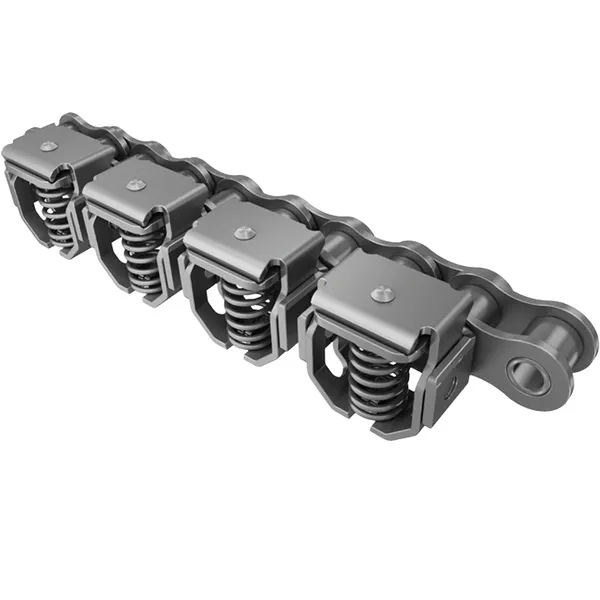
What are the benefits of using an overhead conveyor chain system?
Using an overhead conveyor chain system offers several benefits in various industrial applications. Here are some key advantages:
1. Space Optimization:
– Overhead conveyor chain systems utilize the vertical space, allowing efficient utilization of floor space. This is especially beneficial in facilities with limited floor area, as it enables efficient material handling and production flow without obstructing the work area.
2. Flexibility and Versatility:
– Overhead conveyor chains offer flexibility in routing and can be customized to fit the specific layout requirements of the facility. They can traverse different areas, including assembly lines, paint booths, storage areas, and more. The versatility of overhead systems allows for efficient and adaptable material movement.
3. Improved Safety:
– Overhead conveyor chains minimize ground-level obstructions, reducing the risk of tripping hazards and accidents. Operators and workers can safely navigate the work area without interference from the conveyor system.
4. Product Protection:
– Overhead conveyor chains provide better protection for the products being transported. By keeping the products elevated and away from potential hazards on the floor, such as dust, debris, or spills, the risk of product damage or contamination is reduced.
5. Increased Efficiency:
– Overhead conveyor systems can enhance production efficiency by facilitating continuous material flow and reducing manual handling. They enable automated loading and unloading of materials, leading to faster processing times and improved overall productivity.
6. Easy Maintenance:
– Overhead conveyor chains are typically designed for easy maintenance. Components such as chains, trolleys, and drives can be accessed and serviced conveniently, minimizing downtime and maintenance costs.
7. Customization and Integration:
– Overhead conveyor chains can be tailored to meet specific application requirements, including load capacity, speed, and control systems. They can also be integrated with other automated systems, such as robotic workstations or sorting mechanisms, to further optimize the material handling process.
Overall, using an overhead conveyor chain system provides efficient material handling, maximizes space utilization, enhances safety, and improves productivity in industrial environments.
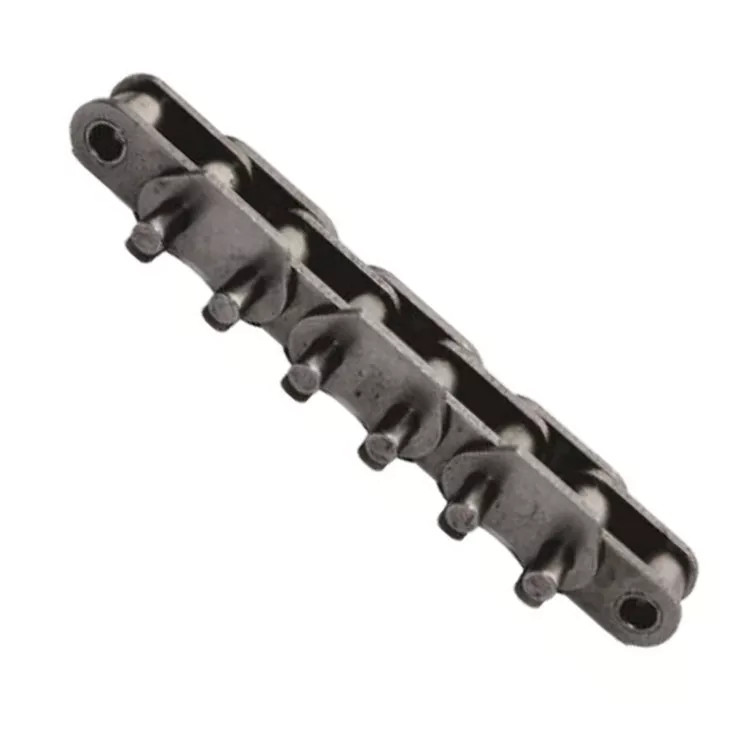
How do you prevent corrosion in conveyor chains?
Preventing corrosion in conveyor chains is essential for maintaining their performance and prolonging their lifespan. Here are some effective measures to prevent corrosion:
1. Material Selection: Choose conveyor chains made from corrosion-resistant materials such as stainless steel, plastic, or coatings specifically designed to resist corrosion. These materials offer better protection against rust and corrosion compared to standard steel chains.
2. Proper Lubrication: Apply a suitable lubricant to the conveyor chain regularly. Lubrication creates a protective barrier that helps prevent moisture and contaminants from reaching the metal surface, reducing the risk of corrosion. Select a lubricant that provides corrosion protection properties and is compatible with the chain material.
3. Environmental Controls: Control the operating environment to minimize exposure to corrosive elements. Implement measures such as humidity control, proper ventilation, and protection from direct contact with water or chemicals. Consider using covers or enclosures to shield the conveyor chain from environmental factors that can accelerate corrosion.
4. Surface Treatments: Apply corrosion-resistant coatings or treatments to the conveyor chain. These coatings can provide an additional protective layer that acts as a barrier against moisture and corrosive substances. Examples of surface treatments include zinc plating, galvanizing, or epoxy coatings.
5. Regular Inspections and Cleaning: Regularly inspect the conveyor chain for signs of corrosion or damage. Remove any accumulated dirt, debris, or corrosive substances promptly. Cleaning the chain helps prevent the buildup of contaminants that can accelerate corrosion.
6. Preventive Maintenance: Implement a preventive maintenance program that includes regular cleaning, lubrication, and inspection of the conveyor chain. This proactive approach helps identify and address any potential corrosion issues early on, preventing further damage.
7. Proper Storage: When not in use, store the conveyor chains in a dry and controlled environment. Protect them from exposure to moisture, humidity, and corrosive substances. Use appropriate storage methods, such as hanging the chains or storing them in sealed containers.
By following these preventive measures, you can significantly reduce the risk of corrosion in conveyor chains, ensuring their optimal performance and longevity.

What are the cost considerations when purchasing a conveyor chain?
When purchasing a conveyor chain, there are several cost considerations that need to be taken into account to ensure an optimal investment and operational efficiency.
1. Initial Cost: The initial cost of the conveyor chain includes the cost of the chain itself, as well as any additional components such as sprockets, attachments, and connecting links. It is important to compare prices from different suppliers and evaluate the overall value for the money.
2. Maintenance and Repair Costs: Consider the long-term maintenance and repair costs associated with the conveyor chain. Some chains may require more frequent lubrication or replacement of components, which can add to the overall operating expenses.
3. Service Life: The service life of the conveyor chain is an essential factor in determining its cost-effectiveness. Chains with longer service life may have a higher initial cost but can result in lower replacement and downtime costs in the long run.
4. Energy Efficiency: Energy consumption is an ongoing cost to consider. Conveyor chains that offer lower friction and efficient power transmission can contribute to energy savings and reduce operating expenses.
5. Maintenance Ease: Consider the ease of maintenance when selecting a conveyor chain. Chains that are easier to clean, inspect, and maintain can reduce labor costs and increase operational efficiency.
6. Compatibility and Integration: Ensure that the selected conveyor chain is compatible with the existing conveyor system or equipment. Retrofitting or modifying the system to accommodate a specific chain may incur additional costs.
7. Supplier Support and Warranty: Evaluate the level of technical support provided by the supplier and the warranty coverage offered for the conveyor chain. This can impact the overall cost of ownership and provide peace of mind in case of any unforeseen issues.
It is important to consider these factors holistically and make a cost-benefit analysis based on the specific requirements of the application. Choosing a conveyor chain that aligns with the budget, performance needs, and long-term cost considerations will help optimize the investment and ensure efficient material handling operations.


editor by CX 2023-08-31